THE GAIA HYPOTHESIS FROM AN EASTERN PERSPECTIVE
In the West, people interpret fate by observing the positions of Earth and other planets. They believe celestial bodies send out energies that reach our planet, quietly shaping every person’s life and destiny.
Eastern thinking takes a more direct view. We see the world we live in not as a cold collection of separate materials, but as a living, super‐organism with its own awareness. The world is always changing in complex, dynamic ways. A person’s fate is shaped by the state of the world at the moment they are born.
This world is composed of two complementary parts: Heaven and Earth, which together make up all things in existence.

Heaven
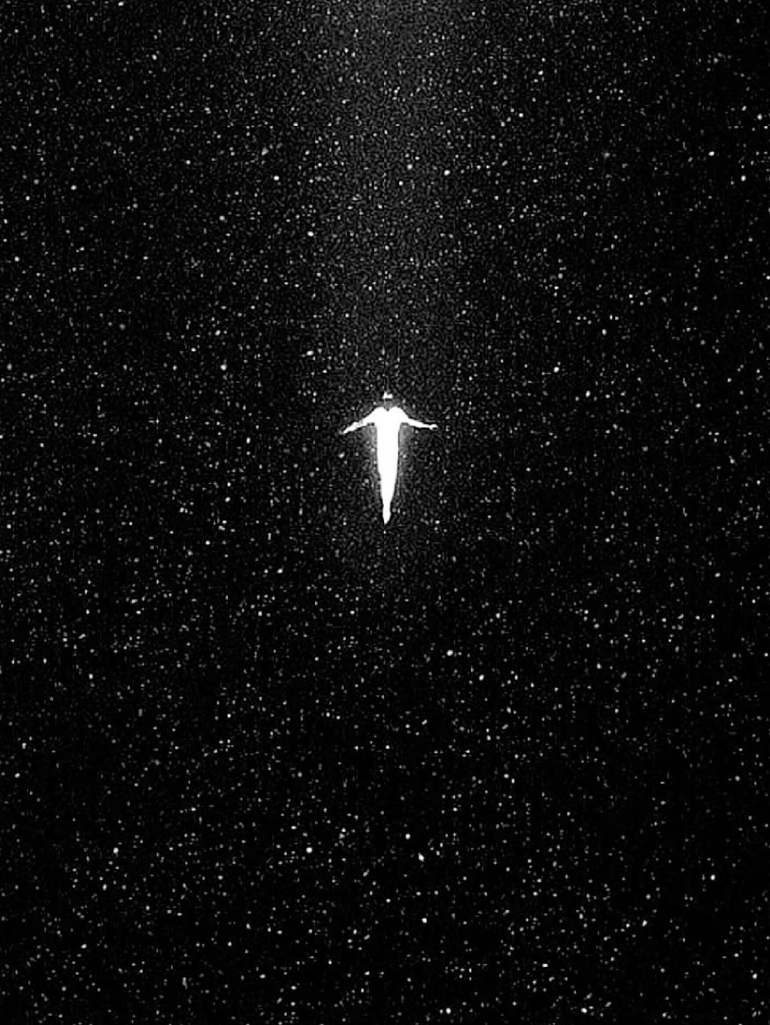
Heaven stands for the invisible, abstract realm. It includes stars, seasons, day and night. It represents the soul and spiritual core of the world. Though intangible, it governs the rhythms of all living things.

Earth
Earth stands for tangible, physical reality. It covers mountains, rivers, lakes, seas, wind, rain, thunder, lightning, plants and animals - everything we can see and touch. It is the physical body and material carrier of this world.

Just like human beings: our minds can be happy, sad, calm or irritable; our bodies can be strong, tired, hurt or healing. The vast universe of Heaven and Earth works in much the same way.
Around 3,800 years ago, Eastern people observed the rules of heaven and earth, and identified five core energy patterns: Wood, Fire, Earth, Metal and Water. These are not merely five substances. They also represent five spatial states, five mental states and five physical states.
Moreover, these five patterns correspond to time, directions, weather, colors, flavors, emotions, personalities, and even internal organs of the human body. This is also the foundation of Traditional Chinese Medicine.
Wood
Represents growth and flexibility. In nature, it is plants spreading and stretching. Emotionally, it means ease and relaxation. Physically, it stands for strong, supple connective tissues.
Fire
Represents rising warmth. In nature, it is flames and rising heat. Emotionally, it is joy and cheerfulness. Physically, it means good blood circulation and vitality.
Earth
Represents support and stability. In nature, it is soil that holds and nurtures all things. Emotionally, it means calm self‐contentment. Physically, it means firm, strong muscles.

Metal
Represents contraction and restraint. In nature, it is hard metal that cuts and shapes things. Emotionally, it means courage and freedom from inner conflict. Physically, it means sturdy, supportive bones.
Water
Represents sinking and nourishment. In nature, it is water flowing down and seeping through the ground. Emotionally, it means gentleness yet firmness. Physically, it stands for soft, well-moisturized skin.
These five patterns were only the earliest form of this theory 3,800 years ago. Over nearly 4,000 years of development, the system has grown to include 22 basic elements, 60 fundamental combinations, and 1,123,200 possible dynamic configurations.
This worldview has woven itself into every corner of Eastern culture, guiding people through their whole lives, from birth to death. People believe good luck and misfortune have nothing to do with being right or wrong, for which are only human judgements. Beyond human viewpoints, following the will of the world is the true “right way”.
More than 2,500 years ago, the ancient Chinese text Tao Te Ching gave its answer to what is truly right:
- “The way of Heaven: it takes from those who have too much, and gives to those who lack.
- The way of humans is different: it takes from those who have little, to enrich those who already have plenty.”
Chinese Destiny Studies & Five Elements Doctrine: A Historical Timeline
-
Pre-Qin Period
Foundation & Origins
Western Zhou · Ji Zi (attributed) · Hong Fan (Great Plan) from The Book of Documents
Earliest surviving systematic record of the Five Elements; defined their core properties
Spring and Autumn · Guan Zhong School · Four Seasons & Five Elements (from Guan Zi)
Created the first framework pairing Yin-Yang & Five Elements with seasons and cardinal directions
Warring States · Zou Yan · Founder of the Yin-Yang School
Developed the Five Elements Conquest theory and Five Virtues Cycle
Extended Five Elements thought from natural philosophy to political and social realms
-
Qin & Han Dynasties
Systematization & Formation
Western Han · Liu An (Chief Editor) · Huai Nan Zi
Established the complete Five Elements Generation sequence; built the cosmic theory of heaven-human resonance
Western Han · Dong Zhongshu · Luxuriant Dew of the Spring and Autumn Annals
Created the first framework pairing Yin-Yang & Five Elements with seasons and cardinal directions
Western Han · Jing Fang · Jing Shi Yi Zhuan
Founded the Na Jia divination method; integrated Five Elements and Stems-Branches into I Ching calculation
Eastern Han · Ban Gu (Chief Editor) · Bai Hu Tong Yi (Discussions in the White Tiger Hall)
Established the Five Elements doctrine as official orthodox philosophy
Eastern Han · Wang Chong · Lun Heng (Discourses Weighed in the Balance)
Proposed the Qi-endowment theory of fate; laid the philosophical foundation of Chinese destiny studies
-
Wei, Jin & Northern/Southern Dynasties
Early Development
Cao Wei · Guan Lu · Grand Master of Divination & Numerology
Integrated Five Elements and I Ching imagery into fortune-telling and physiognomy; popularized folk practice
Eastern Jin · Guo Pu · Grand Master of Feng Shui & Destiny Studies
Attributed works: The Book of Burial & Yu Zhao Ding Zhen Jing pioneered the Na Yin system of destiny analysis
Southern Dynasties (Liang) · Tao Hongjing · San Ming Chao Lue
Integrated Five Elements fate theory into the Taoist intellectual system
Northern Dynasties · Lin Xiaogong · Lu Ming Shu (Book of Official Fate)
One of the earliest systematic monographs on destiny calculation
-
Sui Dynasty
Comprehensive Theoretical Synthesis
Sui Dynasty · Xiao Ji · Wu Xing Da Yi (The Great Meaning of Five Elements)
Definitive synthesis of Five Elements theory from pre-Qin to Sui dynasties
Core theoretical foundation for all subsequent Chinese metaphysical arts
-
Tang Dynasty
Maturation of Classical Destiny Methods
Early Tang · Lü Cai · Xu Lu Ming (Preface to Official Fate Studies)
Systematized prior destiny calculation methods; preserved early historical materials of the field
Mid-Tang · Li Xuzhong · Founder of Classical Destiny Analysis
Created the Three-Pillars fate method; calculated fortune using year/month/day Stems-Branches
Late Tang · Anonymous · Yu Zhao Ding Zhen Jing
Earliest surviving monograph on Na Yin destiny analysis
-
Five Dynasties & Early Song
Birth of Modern Destiny Method
Five Dynasties · Xu Ziping · Founder of the Zi Ping Method
Established the Four Pillars of Destiny (BaZi) framework; centered analysis on the Day Master
Marked the formal formation of BaZi destiny studiesAnonymous · Luo Lu Zi San Ming Xiao Xi Fu
Foundational programmatic classic of Four Pillars destiny theory
-
Song & Yuan Dynasties
Standardization & Spread
Southern Song · Xu Dasheng · Yuan Hai Zi Ping
Earliest surviving full monograph on the Zi Ping method; finalized the core BaZi system
Southern Song · Liao Zhong · Wu Xing Jing Ji
Comprehensive collection of Song-era destiny texts; preserved large amounts of classical method materials
-
Ming Dynasty
Golden Age & Grand Synthesis
Early Ming · Liu Ji · Commentary on Di Tian Sui (Drops of Heaven Marrow)
Elevated destiny studies to the height of Yin-Yang philosophy; pinnacle work of theoretical depth
Mid-Ming · Zhang Nan · Shen Feng Tong Kao
Founded the "illness and remedy" theory; representative work of pragmatic folk destiny practice
Wanli Era (Ming) · Wan Minying · San Ming Tong Hui
Magnum opus of traditional Chinese destiny studies; included in the Siku Quanshu (Imperial Encyclopedia)
Late Ming · Secret text Lan Jiang Wang
Origin of the climate adjustment theory; later renamed Qiong Tong Bao Jian
-
Qing Dynasty
School Diversification & Theoretical Deepening
Qianlong Era (Qing) · Shen Xiaozhan · Zi Ping Zhen Quan
Refined the pattern-based destiny analysis system; core classic of the Pattern School
Daoguang Era (Qing) · Ren Tieqiao · Di Tian Sui Chan Wei
Established the strength-balance approach; foundational work of the Strength & Balance School
Guangxu Era (Qing) · Yu Chuntai (Compiler) · Qiong Tong Bao Jian
Systematized the climate adjustment theory; formalized the Climate Adjustment School
Late Qing · Chen Su'an · Ming Li Yue Yan
Pioneer of the rational and academic approach to destiny studies
-
Modern Era
Academic Transformation
Republic of China · Three Great Masters of Destiny Studies
Xu Lewu, Yuan Shushan, Wei Qianli
Popularized and standardized traditional destiny studiesContemporary · Liang Xiangrun
Systematically sorted classical methods across dynasties; reconstructed the original core system of Zi Ping
Contemporary · Lu Zhiji
Established a modern academic research framework for the history of Chinese destiny studies